Change is possible.
One person can’t change the world alone.
Millions of us can.
ATLAS is built on a simple belief: when individual responsibility becomes collective action, small decisions can grow into real forests and measurable carbon removal.
Personal footprint
Everything we do leaves a footprint.
Driving to work. Heating our homes. Taking a flight. Choosing what we eat. Buying the things we use every day.
Each choice may seem small. Together, they form our personal carbon footprint.
Most of us never see those emissions. But they are measurable.
Reduce what you can. Take responsibility for what remains.
Transport
CO₂
Daily mobility, whether by car, train, or the routines that move us through ordinary life.
Home
CO₂
Heating, cooling, electricity, and the energy that supports the places we live.
Flights
CO₂
Business trips, family visits, and long-distance travel that connects people and places.
Food
CO₂
Meals, ingredients, and everyday eating habits that carry a footprint of their own.
Everyday life
CO₂
The products, services, and useful things we buy and use without thinking much about them.
Seen together, these ordinary parts of life become something measurable: a personal footprint.
Imagine
One person is small.
Millions are not.
One decision may feel insignificant. Repeated across thousands, hundreds of thousands, or millions of people, it becomes something entirely different.
Illustrative scale
1
One person
1,000
People repeating the same choice
100,000
Collective action taking visible shape
1,000,000
Potential becoming physical scale
1
1,000
100,000
1,000,000
Imagine what happens when one million people act.
Illustrative example
Make the invisible physical.
A carbon footprint is usually just a number. ATLAS translates that number into something you can understand: land, trees, and forest.
CO₂
8.4 tCO₂ / year
Illustrative annual footprint only. Your actual result is calculated separately.
LAND
Future calculated land area placeholder
TREES
Future calculated tree equivalent placeholder
FOREST
A managed forest concept with measurable growth over time.
From an invisible footprint to something you can see.
Your number is different. Find out what it means.
What does your footprint look like?
Your number is personal. Estimate your annual CO₂ footprint and see what taking responsibility for part of it could mean in the physical world.
Managed growth
Planting is only the beginning.
A tree can be planted in minutes. Growing a healthy forest takes years. ATLAS contributions are designed to support the full lifecycle of managed forest growth — from planting and irrigation to replanting, pruning, protection, monitoring and long-term care.
We don’t believe planting a tree is enough. We believe in growing forests.
- Planting and early irrigation
- Replacing failed seedlings where needed
- Pruning, maintenance and growth management over time
- Protection, monitoring, measurement and long-term management
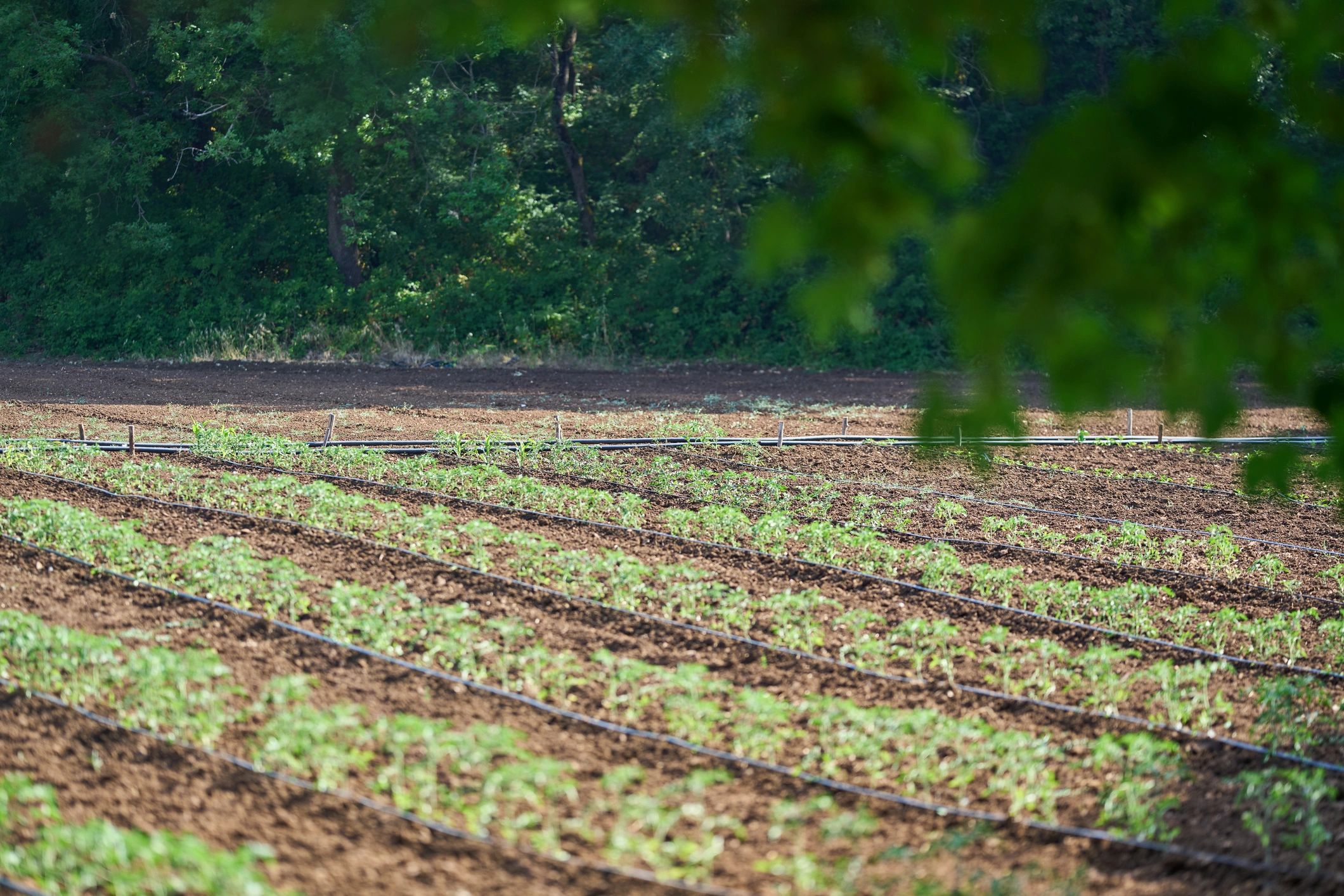
Year 01
Plant and water
Establishment begins with planting, irrigation and close attention to early survival.
Years 02–04
Replace and manage
Failed seedlings may need replanting, while pruning and maintenance help shape healthy growth.
Long term
Protect and measure
A managed forest also requires protection from major risks, monitoring, measurement and long-term care.
Planting
Irrigation
Replanting
Pruning
Maintenance
Risk protection
Monitoring
Long-term management
The work continues long after the first planting day. It is this continuity that begins to turn a young site into a real forest — and sets up the next question of which trees are best suited to that job.
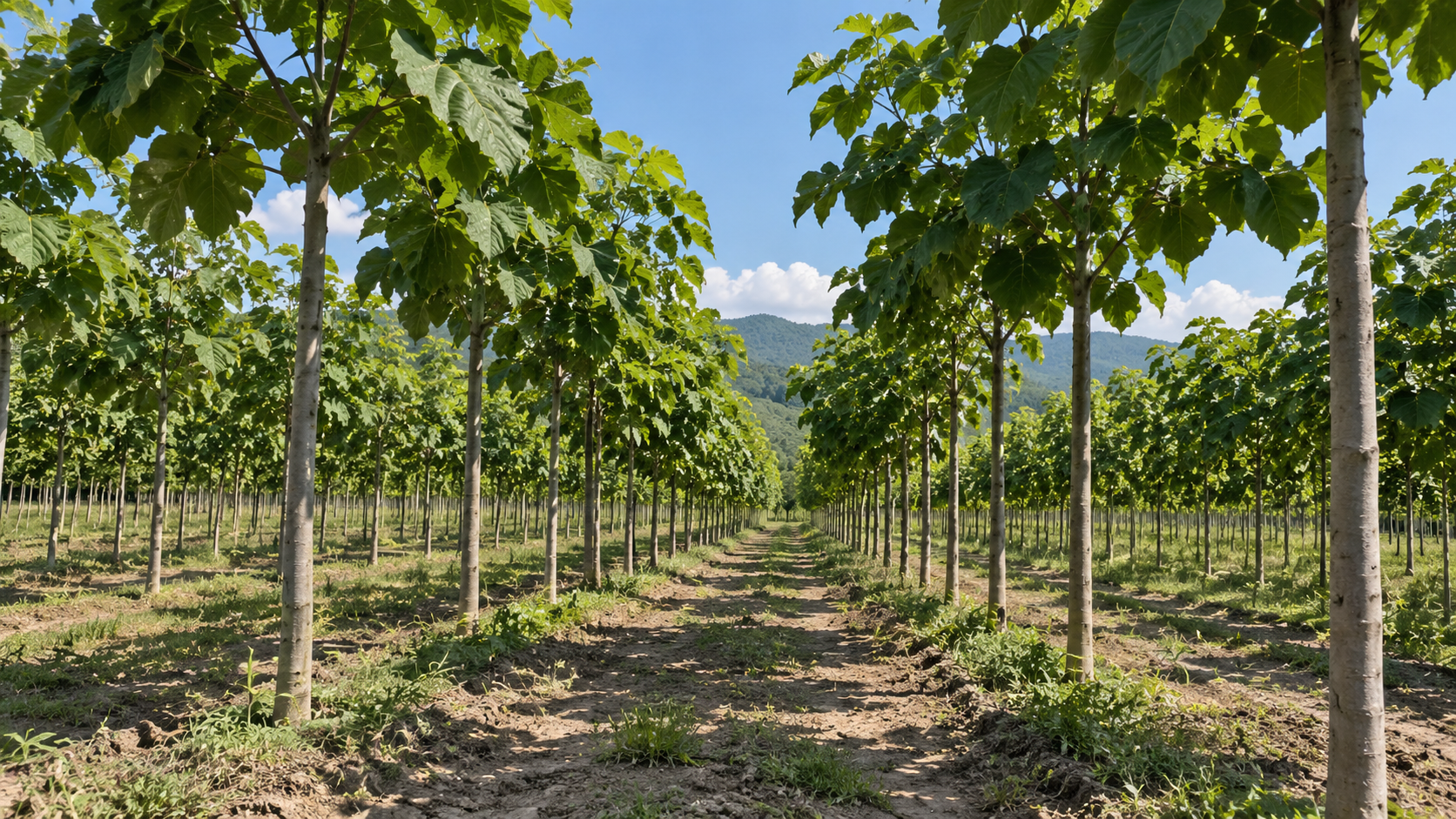
Illustrative Paulownia plantation
Species choice
Why Paulownia?
When the goal is to remove carbon from the atmosphere, growth matters. Paulownia is a fast-growing tree with strong biomass potential, making it an interesting species for actively managed forest systems designed around measurable carbon capture. Its performance depends on site, climate, soil, water availability, age and management.
ATLAS uses an indicative modelling range of approximately 20–30 tCO₂ per hectare per year under suitable growing conditions and active management.
~20–30
tCO₂ per hectare / year
Under suitable growing conditions and active management.
- 01 Fast growth — Paulownia can develop biomass quickly under suitable conditions.
- 02 High biomass potential — Rapid biomass accumulation can support strong biological carbon capture.
- 03 Managed growth — The species responds to active forestry management, making growth, maintenance and measurement important.
- 04 Material value — Its timber can have useful long-lived material applications, supporting broader long-term carbon-storage thinking.
Fast growth helps capture carbon. What happens next determines how long it stays out of the atmosphere.
Long-term carbon thinking
Capturing carbon is only part of the job.
Keeping it out of the atmosphere matters too.
100+
YEARS
Minimum public durability target
Trees can capture carbon as they grow, but long-term climate impact depends on what happens to that carbon afterward. ATLAS is designed around a public target of at least 100 years of durable carbon storage for carbon ultimately counted as durable removal.
Biological capture is the first step. Durable storage is the long-term objective, whether carbon is directed into long-lived materials or other durable carbon-storage pathways.
Atmosphere
Carbon enters a growing system.
Tree growth over time
Growth rings as a time marker
Tree rings can help illustrate time, biological growth, and the idea of carbon moving from living biomass toward longer-term storage pathways.
Long-term storage
The climate value depends on how long that carbon remains out of the atmosphere.
Capture
Trees and biomass can remove carbon from the air while they grow.
Durability
Durable removal depends on whether that same carbon is kept stored for meaningful periods of time.
Insights
Explore the science, methods and ideas behind personal carbon responsibility, new forests and durable carbon removal.
What Your Carbon Footprint Really Means
Your carbon footprint is an estimate of the emissions connected to travel, home energy, food and consumption. This… Read insight
Questions worth asking.
What does ATLAS actually do?
ATLAS connects personal carbon responsibility with the creation and management of new forests. The idea is to estimate part of a person’s footprint, translate it into measurable forest growth, and connect carbon removal to real land, trees and long-term care.
Why Paulownia?
Paulownia is a fast-growing species with strong biomass potential under suitable conditions. ATLAS is interested in it because rapid managed growth can support significant biological carbon capture, while actual performance still depends on climate, site, age, water and management.
How is CO₂ removal estimated?
ATLAS combines growth models with field measurement. Tree age, size, biomass and actual growth all matter, and measured performance is used to refine estimates over time. A reserve is also maintained to help account for uncertainty and natural variation.
Do I own the trees?
No legal ownership of the trees or land is implied. ATLAS is designed to connect your contribution with real forest growth and carbon removal, while keeping the idea of your forest and your impact meaningful without suggesting legal title.
What happens if trees grow less than expected?
Forests do not grow exactly according to a spreadsheet. Weather, drought, mortality and site conditions can change outcomes, so ATLAS relies on measurement, conservative allocation and reserve capacity so underperformance can be reconciled rather than ignored.
Is this the same as buying carbon credits?
Not exactly. ATLAS focuses on connecting personal climate action with physical new forest growth, measurable biological removal and a long-term durable-storage objective. It may use familiar carbon-accounting ideas, but the experience is intended to feel more physical, transparent and personally connected than buying an abstract certificate.
Your footprint is personal. Your action can be too.
Understanding your footprint is the first step. See what your emissions look like and what taking responsibility for part of them could mean.
Join the movement
Follow ATLAS as it grows. Get occasional updates, research and opportunities to take part.
By joining, you agree to receive occasional ATLAS updates. You can unsubscribe at any time. Read our Privacy Policy.