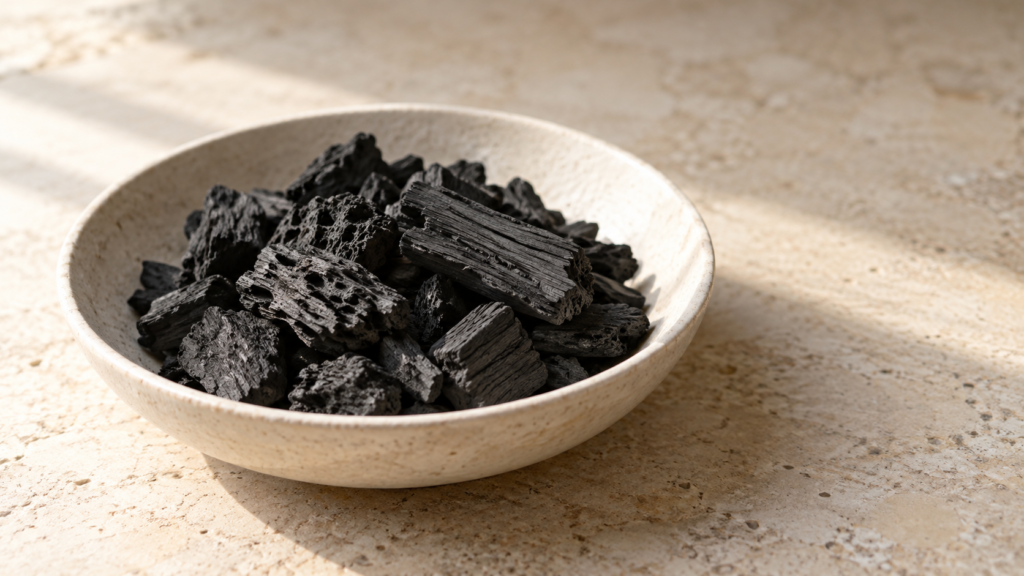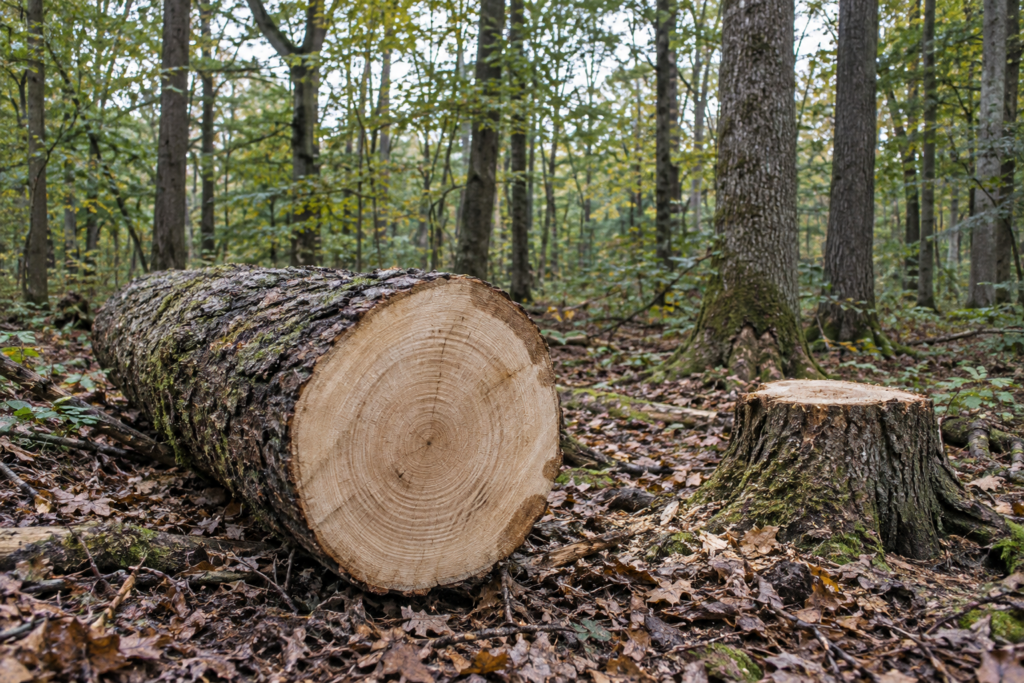
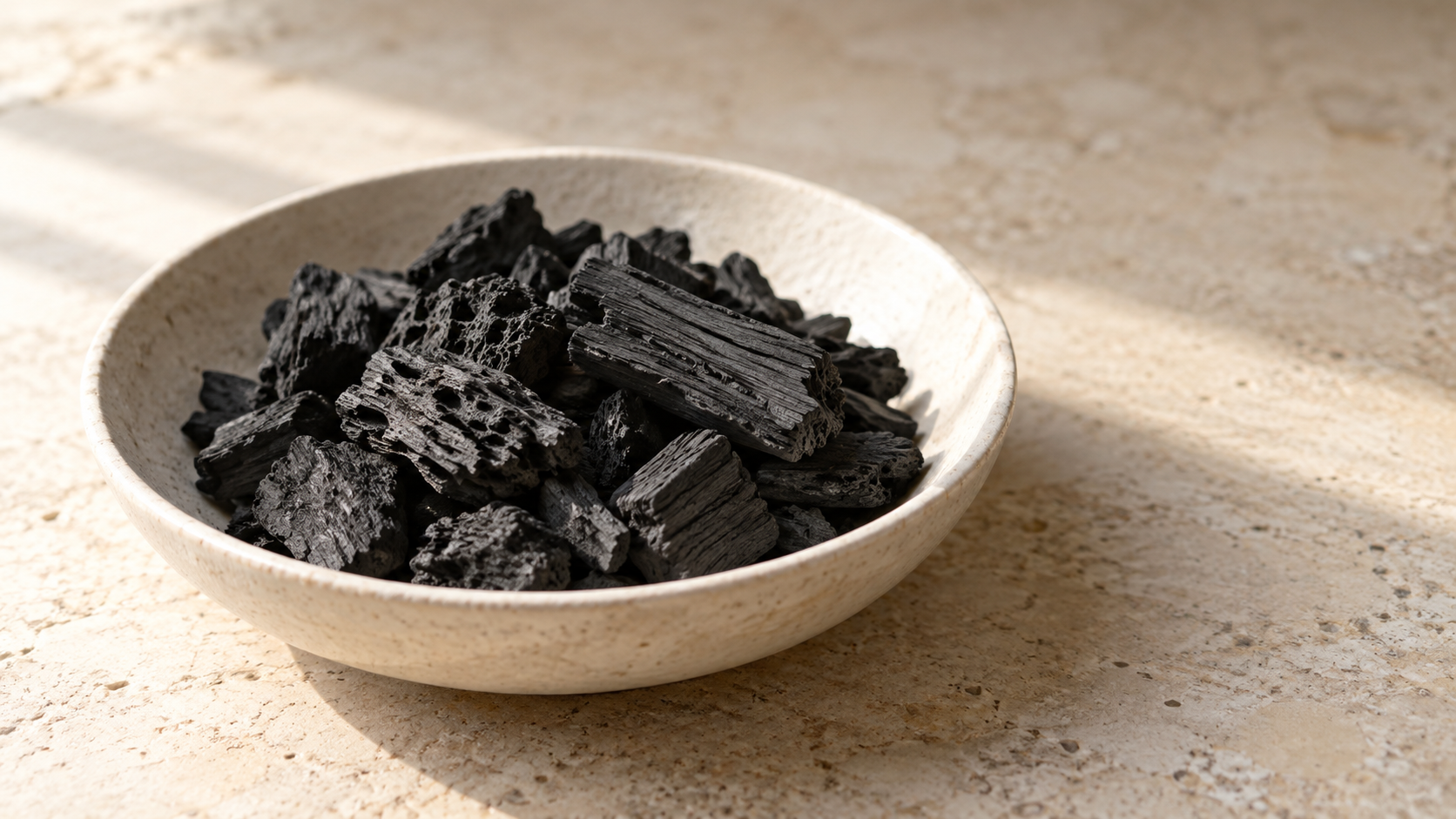
Biochar is a carbon-rich material made by heating biomass, such as wood residues or crop stalks, with very little oxygen. It looks much like charcoal. Its properties depend on what went into the process and how it was made. USDA Climate Hubs explains the basics.
The material has attracted considerable attention in carbon markets. According to CDR.fyi’s Q1 2026 market report, biochar accounted for about 93% of the durable carbon dioxide removal volume contracted during the quarter in the market it tracks.
“Contracted” matters: the figure describes purchasing commitments, including future deliveries. It does not mean biochar performed 93% of all carbon removal worldwide, or that those contracted tonnes had already been removed.
To understand the interest, it helps to follow the carbon from the plant into the finished material.
Heat changes the material
The process is called pyrolysis: heating organic material while limiting oxygen. Instead of allowing the material to burn away, the process leaves a carbon-rich solid and also produces gases and liquids. Only part of the original carbon ends up in the biochar.
Some of the gases can be burned to supply heat for the process. Where useful surplus energy replaces fossil fuel use, that may bring an additional climate benefit. That avoided fuel use must be distinguished from carbon stored in the char. A 2025 scientific review describes these separate contributions.
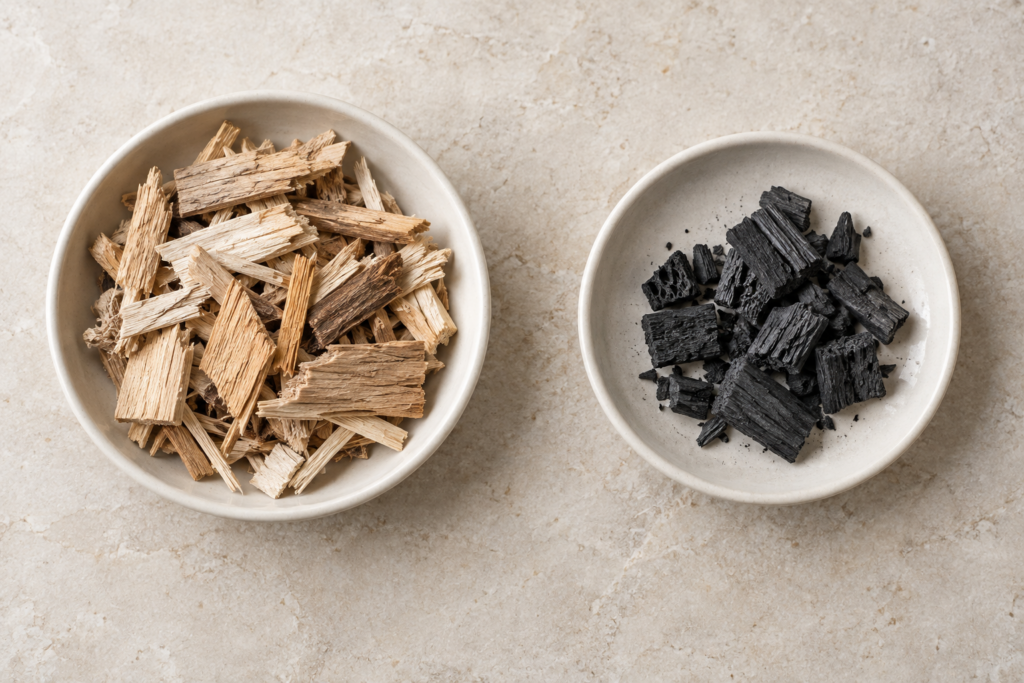
The resemblance to charcoal is real, but the intended use matters. Fuel charcoal is made to be burned. Biochar used for carbon storage needs to remain in an appropriate long-term use or storage setting. Calling a product biochar does not, by itself, prove that outcome. USDA’s biochar fact sheet describes the material and its uses.
The carbon was captured by the plant
A plant takes in CO₂ through photosynthesis and uses the carbon to build its tissues. When plant material decomposes or burns, carbon can return to the atmosphere. Converting some of that material into biochar makes part of its carbon more resistant to breakdown.
The plant performed the atmospheric capture. Pyrolysis changes what happens to that captured carbon afterwards; it does not capture the same carbon a second time. This is the basic pathway described in Isometric’s biochar production and storage protocol.
How long can it remain? Some biochar carbon can persist for centuries or longer, but a batch contains fractions that break down at different rates. Starting material, production conditions and the storage environment all matter. Long-term estimates draw on measurements and models; they are not observations of a newly produced batch lasting for centuries. The research on biochar persistence supports durable storage while leaving uncertainty about the amount retained over a particular period.
A useful question is therefore: how much carbon is expected to remain, under which conditions, and for how long?
Why buyers are paying attention?
Biochar’s commercial appeal includes practical considerations. In its September 2025 market analysis, CDR.fyi identified relatively quick delivery, lower prices than other removal methods and the ability to begin with small purchases as reasons buyers were choosing it. These are market observations, not proof that every biochar project offers good value or environmental integrity.
The Q1 2026 figure also reflects concentration. The five largest transactions were all for biochar and together represented approximately 91% of the quarter’s total contracted volume, according to the quarterly report. A few large agreements can strongly shape a quarterly percentage.
The figure establishes substantial buying interest within that market. It does not establish that biochar is the best choice in every location or for every carbon-removal need.
What happens when it goes into soil?
Biochar can also be used as a soil amendment. Depending on the material and the soil, it may help retain water or nutrients and change soil acidity. USDA guidance identifies particular opportunities in low-fertility or acidic soils, while stressing the importance of local conditions. USDA: Soil Restoration with Biochar.
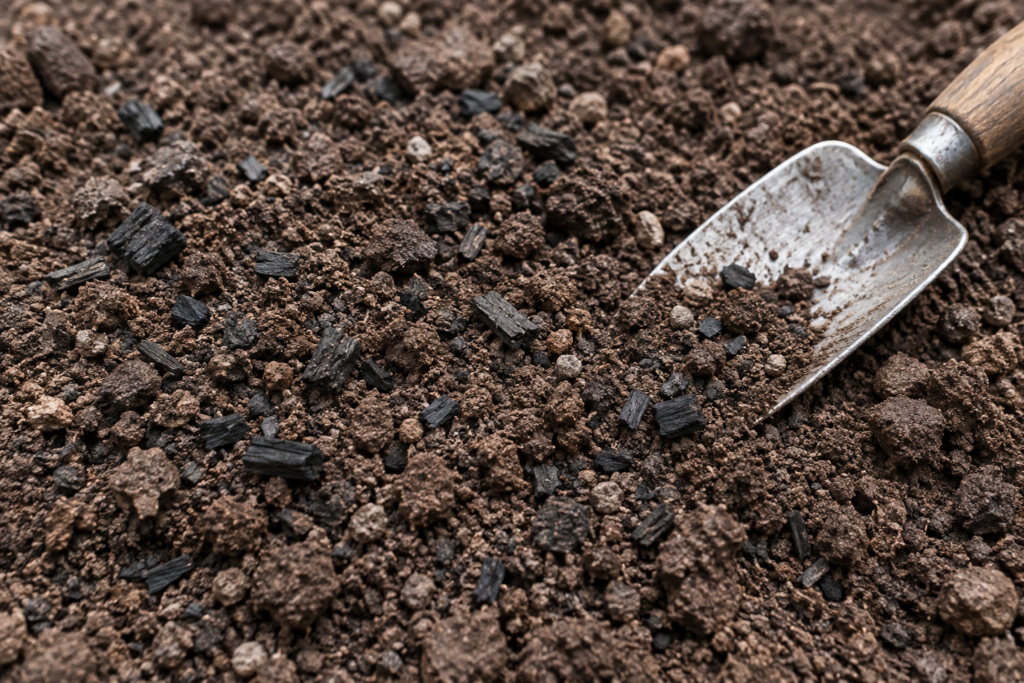
Those effects are not automatic. The same USDA guidance notes that adding biochar can initially tie up nutrients and temporarily reduce plant growth. Improving one soil does not demonstrate that the same product or application will improve another.
Quality matters, too. A material intended for soil needs to be assessed for its suitability, including potential contaminants. For example, Isometric’s soil-storage module includes testing requirements for heavy metals. Black colour and a porous texture cannot tell a buyer whether a product meets those requirements.
A bag of biochar is not yet a removal claim
The climate assessment starts before the reactor. What would have happened to the biomass otherwise? Residues may already have useful roles, including returning organic matter to soil. Diverting material from another use can also cause effects elsewhere. These questions appear explicitly in feedstock accounting requirements.
Then the assessment follows production and storage. Transport, preparation and processing produce emissions. The stored carbon must be measured and its durability assessed. In the Isometric protocol, accounting deducts lifecycle emissions and carbon that would have remained stored without the project; independent verification is required, and removal credits are issued after durable storage. See the protocol’s accounting and verification requirements.
Such lifecycle accounting can use CO₂-equivalent, or CO₂e, to compare the warming effects of different greenhouse gases. That is an accounting unit; the material physically retained in biochar is carbon.
These distinctions explain why the weight of a bag, a purchasing agreement and a verified removal credit answer different questions.
Biochar offers a way to extend the storage of carbon captured by plants. Judging a particular project means following the whole chain: where the biomass came from, how it was processed, where the char went and what evidence supports the claimed benefit.